
Overview
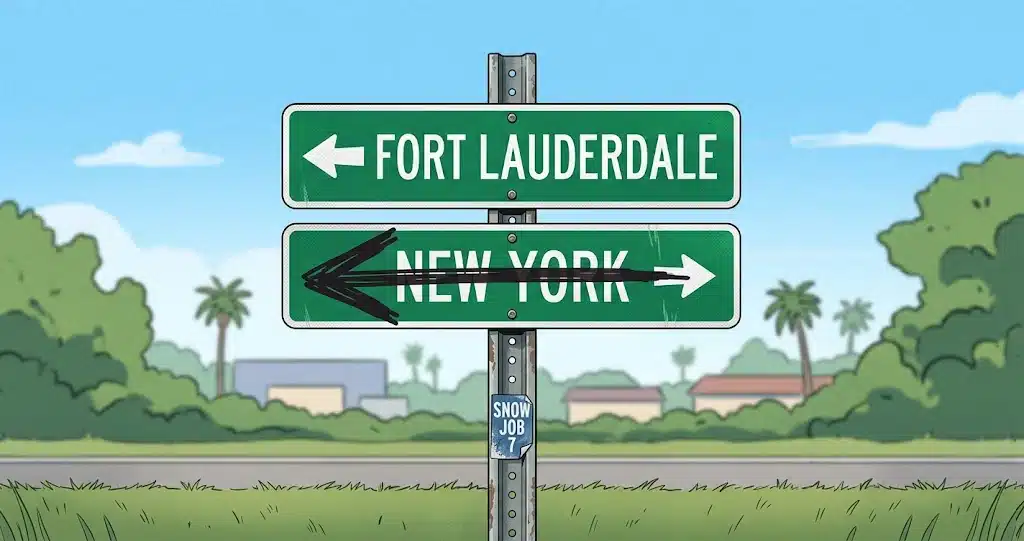
Part 7 is built around one central claim that is now more documented than it was in Part 3, and one central legal conclusion that is flatly wrong under unanimous U.S. Supreme Court precedent. The prosecution concession that the venue stipulation was false is real and Parlato finally quotes it directly. But the conclusion he builds on top of it, that a false venue stipulation makes the underlying verdict false and that the proper remedy was immediate dismissal, is not supported by American law. It is contradicted by a 9-0 Supreme Court ruling issued just one year before Hernandez’s trial. Parlato either does not know this ruling exists or has chosen not to mention it. Either way, his readers deserve to know.
Claim-by-Claim Fact-Check
✅ SIGNIFICANT UPGRADE: The prosecution concession is now directly quoted
In Part 3 of this series, we noted that Parlato’s claim about a prosecution concession was unverified, sourced only from his own paraphrase of documents he did not link or quote. Part 7 corrects that. He now provides the actual language: “The government concedes that the venue stipulation read to the jury was false.”
This is a real and significant concession. If the prosecution stipulated to the jury that Hernandez first arrived in New York when the extradition flight actually landed in Fort Lauderdale, and the prosecution later acknowledged in writing that this stipulation was false, that is a documented factual error in the trial record that was presented to the jury as an agreed fact. That matters and deserves serious scrutiny.
We acknowledge this upgrade from Part 3. The concession is now quoted, not paraphrased.
⚠️ STILL MISSING: The source document
Parlato quotes the concession but still does not identify which document it appears in. Was it in the government’s brief opposing Hernandez’s new trial motion before Castel? Was it in the government’s Second Circuit appellate brief? Was it in a letter to the court? The full context of the concession matters considerably. A government that concedes a factual error while simultaneously arguing it constitutes harmless error is in a very different legal position than one that concedes deliberate misconduct. Without the source document, readers cannot assess the full context of the admission.
❌ FACTUALLY WRONG: “If the stipulation was false, the verdict was false”
This is the central legal claim of Part 7 and it is wrong under binding Supreme Court precedent that was decided a full year before Hernandez’s trial.
In Smith v. United States, 599 U.S. 236 (2023), the Supreme Court addressed precisely this question: what is the proper remedy when a defendant is tried in an improper venue? In a unanimous 9-0 opinion authored by Justice Samuel Alito, the Court held: “The Constitution permits the retrial of a defendant following a trial in an improper venue conducted before a jury drawn from the wrong district.”
Justice Alito’s opinion was unambiguous: “The appropriate remedy for prejudicial trial error, in almost all circumstances, is simply the award of a retrial, not a judgment barring prosecution.” The Court specifically rejected the argument that a venue violation either invalidates the original verdict or bars reprosecution. The remedy is a new trial in the correct venue, not freedom.
Parlato writes: “The stipulation established jurisdiction. Jurisdiction established the court’s authority to return a verdict. If the stipulation was false, the verdict was false.” This is not what the Supreme Court says. A verdict returned in an improper venue is a reversible error that permits retrial. It is not a nullity. It is not “false.” The highest court in the country, in a unanimous ruling one year before this trial, said so directly.
This matters enormously for the overall argument of the series. Even if everything Parlato says about the venue stipulation is correct, the best legal remedy Hernandez could have obtained through a successful appeal was a new trial in Miami. Not acquittal. Not dismissal. A new trial. And given that the government had already convicted his brother Tony on the same conspiracy using the same cooperators, a retrial in Florida was not the guaranteed acquittal Parlato implies.
❌ STILL WRONG: “Castel ignored the issue and sentenced Hernandez”
For the third time across this series, Parlato states that Castel simply ignored the venue problem at sentencing. This remains factually incorrect. Castel issued a written ruling denying the motion for a new trial, which specifically addressed the venue argument on the merits and rejected it. A judge issuing a written ruling denying a motion is the opposite of ignoring it. Parlato has now repeated this false characterization in Parts 3, 6, and 7.
❌ MISLEADING: The Second Circuit vacated the conviction
Parlato writes that “the Second Circuit dismissed the appeal as moot and vacated the conviction” as if this were a judicial finding that something went wrong at trial. It was not. When an appeal becomes moot, typically because the defendant has already received the relief he sought through other means, appellate courts routinely vacate the lower court judgment as a procedural matter. This is called a Munsingwear vacatur, a standard housekeeping step when a case becomes moot on appeal. It carries no finding on the merits. The Second Circuit did not conclude that the venue argument was correct, that the stipulation was improperly obtained, or that the conviction was wrong. It concluded the case was moot because Hernandez had accepted a presidential pardon. Hernandez himself chose a pardon over a potentially vindicating appellate ruling. That choice was his to make, but it means the merits of the venue argument were never tested.
❌ UNSUPPORTED: “They lied”
Parlato states flatly twice: “They lied” and “So they lied.” The prosecution conceding that a stipulation was false does not establish that the stipulation was intentionally falsified. Stipulations in federal cases are drafted by prosecutors, reviewed by defense counsel, and signed by both sides. If the flight records showing a Fort Lauderdale landing were available to both parties, the question of why defense counsel signed a stipulation stating New York was the first point of entry is one Parlato never asks. A false stipulation could reflect deliberate deception by prosecutors. It could also reflect a drafting error that defense counsel failed to catch before signing. It could reflect confusion about which district Fort Lauderdale is in relative to the extradition logistics. “They lied” is a conclusion requiring proof of intent that Parlato does not establish.
If the prosecution deliberately falsified a jurisdictional stipulation, that is a serious Rules of Professional Conduct violation. But “the stipulation turned out to be false” and “prosecutors intentionally lied to the court” are two different things, and the concession language Parlato quotes does not specify which one occurred.
❌ SPECULATION: The Florida bench and jury argument
Parlato argues at length that a Miami trial would have produced acquittal because Trump-appointed judges and Cuban-American and Honduran-American jurors would have been more sympathetic. This argument has the same problem it had in Part 3: it substitutes hoped-for demographic sympathy for actual legal process. Federal jurors are not selected on the basis of their community’s political leanings or their familiarity with a defendant’s home country. They are selected through voir dire designed to identify and remove bias. A fair trial is not defined as one before jurors who share the defendant’s political worldview. It is defined as one before an impartial jury. Parlato’s Miami jury argument is an argument for a favorable jury, not an impartial one, and those are not the same thing.
Furthermore, the Tony Hernandez trial, which Parlato continues to ignore across seven installments, was held in Manhattan before the same judge, using many of the same cooperators. Tony was convicted and sentenced to life plus 30 years. If the Manhattan bench and jury were systematically rigged against Honduran defendants, that rigging apparently began before Biden took office and applied equally to the president’s brother.
⚠️ FAIR POINT: The double standard on false stipulations
Parlato notes that a defense attorney who presented a false factual stipulation to a federal jury would face disbarment proceedings, while prosecutorial misconduct is frequently absorbed into the system without career consequences. This is a legitimate observation about asymmetric accountability in the federal justice system. It is well documented in legal scholarship and not contested here. It does not prove the stipulation was intentionally falsified, but the underlying point about how prosecutorial misconduct is treated versus defense misconduct is valid and worth raising.
What Part 7 Establishes and What It Does Not
With the direct quote of the prosecution concession, Part 7 establishes one thing clearly: the government acknowledged in writing that a stipulation it presented to the jury about the point of first entry was false. That is a documented problem with the trial record that deserved appellate review. The Second Circuit never provided that review because Hernandez accepted his pardon first.
What Part 7 does not establish is that the false stipulation makes the verdict false, that the proper remedy was dismissal rather than retrial, that the false stipulation was intentional rather than erroneous, or that a retrial in Florida would have produced acquittal. All four of those conclusions are either legally wrong, unsupported by evidence, or speculative.
The venue issue remains the most legitimate documented grievance in the entire series. It is undermined, not strengthened, by the legal overreach Parlato builds on top of it.
Summary Scorecard
| Claim | Verdict |
|---|---|
| Prosecution conceded the venue stipulation was false | ✅ Now directly quoted; a real and documented concession |
| Source document for the concession identified | ⚠️ Still not provided; context of the concession remains unknown |
| “If the stipulation was false, the verdict was false” | ❌ Directly contradicted by Smith v. United States (2023), a unanimous 9-0 Supreme Court ruling; the remedy for improper venue is retrial, not dismissal |
| Castel ignored the venue issue and sentenced Hernandez | ❌ False for the third time across the series; Castel denied the motion in a written ruling |
| Second Circuit vacated the conviction on the merits | ❌ Misleading; it was a standard procedural moot vacatur, not a merits ruling |
| “They lied” about the stipulation | ❌ Not established; a false stipulation requires proof of intent to deceive, which the concession language does not provide |
| A Florida jury would have acquitted Hernandez | ❌ Speculation; Tony Hernandez was convicted in Manhattan by the same judge using the same cooperators; retrial is not guaranteed acquittal |
| Asymmetric accountability between prosecutors and defense attorneys | ✅ A legitimate and documented observation about the federal justice system |