
Frank Parlato’s 4th article in his series on Juan Orlando Hernandez was published on FrankReport and ArtVoice on May 5, 2026
Overview
Part 4 is built around two evidentiary arguments: that Judge Castel improperly excluded seven drug ledgers that would have undermined the prosecution’s interpretation of “La JOH,” and that cooperating witnesses lied about Hernandez providing radar intelligence from a system that did not yet exist. Both arguments contain a kernel of documented fact. Both are then stretched far beyond what the record supports, and the most explosive conclusion in the piece, that prosecutors committed the federal crime of subornation of perjury, is stated as a certainty without the evidence required to establish it.
Claim-by-Claim Fact-Check
✅ PARTIALLY ACCURATE: The seven ledgers were excluded and the fumigation entries are real
This is the most documentable claim in the article, and it is substantiated. The actual defense filing to Judge Castel, which Parlato links in his article, confirms that the prosecution objected to the admission of seven of the nine ledgers seized from Magdaleno Meza. It confirms that at least one of the excluded ledgers contained the entries “payment to JOH for fumigation” and “payment to JOH for weeding and cleaning of River.” It also confirms that Judge Castel sustained the objection, excluding those ledgers from jury consideration.
These are real facts from a real court document. The ledgers existed. The fumigation entries existed. The judge excluded them.
❌ MISLEADING: Castel’s ruling as evidence of judicial complicity
Parlato describes Castel as “compliant” for sustaining the prosecution’s objection, strongly implying the ruling was corrupt or politically motivated. This is not how evidentiary rulings work, and Parlato provides no legal basis for why the exclusion was improper.
Judges exclude evidence for many legitimate reasons: relevance, authentication problems, hearsay, the risk that marginally relevant material will confuse the jury, or prejudice that outweighs probative value. The excluded ledgers came from a dead man whose business records mixed legitimate agricultural payments with drug trafficking notations. The question of whether a fumigation company called “JOH” in some entries was the same “JOH” as in two other ledgers was a judgment call about relevance and likely confusion. Reasonable judges can exclude that evidence without being corrupt.
More importantly, the prosecution’s burden was to prove Hernandez received bribes, not to decode every entry in every ledger. The ledgers were supporting context, not the core of the case. Cooperator testimony was the core. Excluding ambiguous entries from a secondary document is not the same as hiding evidence of innocence.
❌ OVERSIMPLIFIED: The Spanish article “La” argument
Parlato claims the feminine article “La” before “JOH” “would naturally refer to a woman or to a business, not to a man,” and therefore could not refer to Juan Orlando Hernandez. This is linguistically flawed.
In Latin American Spanish, it is entirely common to use the feminine article “La” before an acronym or nickname when referring to a male politician’s organization, network, or influence sphere. “La gente de JOH” (JOH’s people), “La estructura de JOH” (JOH’s structure), or simply “La JOH” as shorthand for an organization bearing his initials are all natural constructions. Drug ledgers use coded shorthand by design. The idea that a cartel bookkeeper in Honduras would write “La JOH” only if referring to a fumigation company, and never to a political figure’s network, assumes a grammatical rigidity that does not exist in informal written Spanish, and certainly not in criminal record-keeping.
Furthermore, the prosecution had cooperating witnesses who testified directly that JOH referred to Hernandez in the context of drug payments. The ledger entries were corroborative, not stand-alone proof. The “La” article argument is clever-sounding but linguistically thin.
⚠️ PARTIALLY SUPPORTED: The radar timeline question is real but more complicated than Parlato states
This is the most substantive factual dispute in Part 4, and it deserves careful treatment.
Parlato says the defense’s Air Force witness testified no radar existed in Honduras until after 2015, and that the INCSR reports confirm Honduras lacked radar capability during the years the cooperators described receiving radar intelligence. This is partially correct but significantly overstated.
What the INCSR reports actually show is more nuanced. The 2013 and 2014 State Department reports describe Honduras as lacking the detection infrastructure needed to deter drug flights, which is why 75 percent of South American cocaine flights were landing there. But the 2015 INCSR reports something important: the U.S. government “suspended radar assistance to the Honduran air force” after Honduras passed its aerial exclusion zone law. The word “suspended” implies such assistance already existed and was being provided before it was stopped. This directly contradicts the claim that no radar capability existed at all before 2015.
InSight Crime reported in 2018 that Honduras acquired formal radar systems in 2014, the year Hernandez took office as president. If radar systems arrived in 2014, and Ardon’s mayoral term ended in 2013, the timeline concern about what Ardon could have received is legitimate for his specific testimony. But Perez and Lobo were active after 2014, meaning the radar timeline challenge applies only to part of the cooperator testimony, not all of it.
More broadly, the cooperators described receiving intelligence about when airspace was being monitored and where detection gaps were. This kind of operational intelligence does not require a formal radar system. It requires only that someone with connections to the security apparatus know when surveillance was active. Honduras had military checkpoints, DEA cooperation, and partial U.S.-provided detection assistance throughout this period. Parlato’s framing treats “no formal Israeli-purchased radar system” as equivalent to “no detection capability whatsoever,” which is a false equivalence.
❌ OVERREACHING: “The prosecutors committed subornation of perjury”
Parlato writes: “The prosecutors put three witnesses on the stand to tell a story they knew was not true. The federal criminal code calls it subornation of perjury. 18 U.S.C. Section 1622.”
This is the strongest accusation in the series so far, and it is stated without the evidence required to support it. Subornation of perjury requires proof that (1) a witness gave false testimony under oath and (2) the attorney knowingly induced that false testimony. Parlato has established neither element definitively.
On the first element: the radar timeline dispute is a genuine factual question, not a proven lie. The cooperators may have been describing intelligence about detection operations rather than formal radar systems. They may have been imprecise about dates. They may have conflated partial U.S. radar assistance with a formal national system. None of these possibilities equals perjury.
On the second element: even if the cooperator testimony about radar was false, Parlato provides no evidence that the prosecutors knew it was false when they called the witnesses. Prosecutors prepare witnesses through proffer sessions; they do not independently verify every factual claim a cooperator makes against independent technical records before trial. The claim that prosecutors “almost certainly came up with the story” is speculation stated as inference.
Accusing four named federal prosecutors by name of committing a federal crime requires more than a timeline discrepancy in cooperator testimony. Parlato offers the accusation as a conclusion and moves on.
✅ ACCURATE BUT INCOMPLETE: General Kelly’s Senate testimony
Parlato correctly notes that General John Kelly, then SOUTHCOM commander, testified before the Senate Armed Services Committee in March 2015 that drug-trafficking flights into Honduras had fallen dramatically under Hernandez, attributing a roughly 98 percent reduction to Hernandez’s government. This is real testimony and relevant context.
But Parlato presents this as a devastating irony that collapses the prosecution’s theory, and that is where the logic breaks down. Judge Castel addressed this exact argument explicitly in his sentencing remarks. A corrupt official publicly fighting drug trafficking while privately accepting bribes from selected traffickers is not a contradiction that defeats the prosecution’s case. It is the prosecution’s precise theory: that Hernandez selectively targeted rival organizations and lower-level traffickers as a public performance while protecting the networks that paid him.
The dramatic reduction in drug flights Kelly described in 2015 coincides with the period after Honduras acquired the Israeli radar systems in 2014, which also coincides with the dismantling of the Cachiro and Valle Valle organizations that had bribed Hernandez. The radar that nearly stopped drug flights was installed by a president who had previously been paid not to build detection capacity. That sequence is not exculpatory. It is the prosecution’s narrative.
❌ MISLEADING: The framing of evidentiary exclusion as conspiracy
Part 4’s opening sentence describes the trial as “theatrically produced through a collaboration between Judge P. Kevin Castel and the Biden DOJ.” This framing has no evidentiary support anywhere in the article. Parlato presents two evidentiary rulings, one suppression of seven ledgers and one instance of cooperator testimony he believes was false, and converts them into proof of a judicial-prosecutorial conspiracy. That conclusion requires evidence of coordination between the judge and the prosecutors, which Parlato does not provide.
Judges exclude evidence in every trial. Cooperating witnesses give testimony that defendants dispute in every drug case. These are not anomalies suggesting a rigged proceeding. They are features of an adversarial legal system that Parlato is framing as extraordinary when they are ordinary.
The Pattern Across Parts 1 Through 4
Four installments in, a consistent structure has emerged. Parlato identifies a real issue, a genuine timing discrepancy, a legitimate evidentiary dispute, a real legal question about venue, a documented geopolitical context, and then inflates it into proof of a coordinated criminal conspiracy spanning the DOJ, SDNY prosecutors, and a federal judge. Each installment treats the absence of a definitive rebuttal as confirmation of the worst possible explanation.
The radar timeline question deserves genuine scrutiny. The ledger exclusion ruling is worth examining critically. But “worth scrutinizing” and “proof of subornation of perjury by named prosecutors” are very different standards, and Parlato consistently presents the former as though it establishes the latter.
Summary Scorecard
| Claim | Verdict |
|---|---|
| Seven ledgers were excluded; fumigation entries existed | ✅ Accurate and documented in defense filing |
| Castel’s exclusion ruling proves judicial complicity | ❌ Unsupported; evidentiary exclusions are routine and legally reviewable |
| “La JOH” cannot refer to a man in Spanish | ❌ Linguistically wrong; the construction is natural for a political network or organization |
| Honduras had no radar before 2015 | ⚠️ Partially accurate; formal Israeli systems arrived in 2014, but U.S. radar assistance predates that, and “radar information” in testimony may describe broader operational surveillance intelligence |
| Cooperators could not have received radar intelligence before radar existed | ⚠️ Valid concern for Ardon’s pre-2014 period; does not apply to Lobo and Perez whose relevant activities extended past 2014 |
| Prosecutors committed subornation of perjury | ❌ Stated as fact; supported only by a timeline inconsistency that has multiple alternative explanations |
| General Kelly credited Hernandez for reducing drug flights | ✅ Accurate, but the prosecution’s theory explains this as selective enforcement used as cover, not evidence of innocence |
| The trial was “theatrically produced” by Castel and the DOJ together | ❌ No evidence of judicial-prosecutorial coordination; two contested evidentiary rulings do not establish conspiracy |
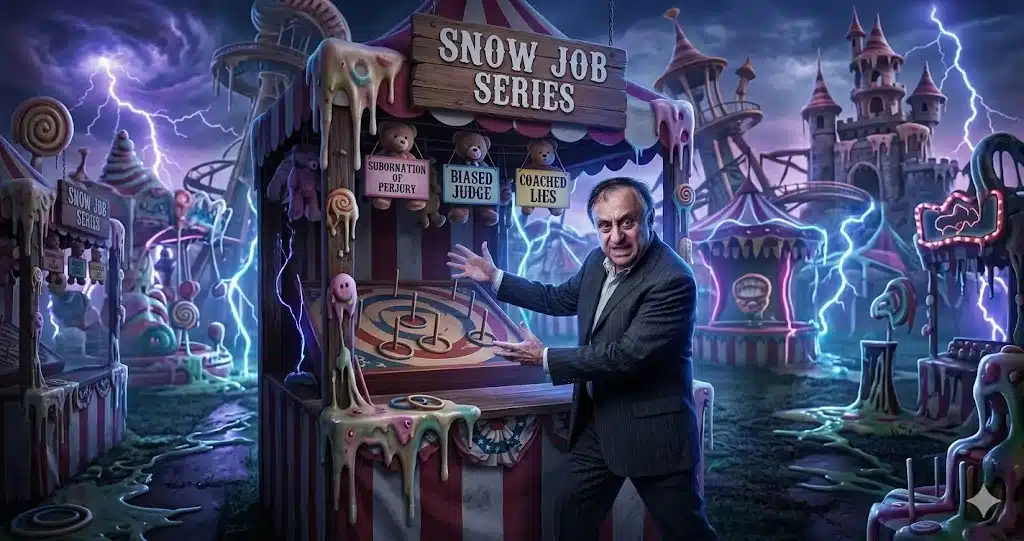
This article is part of the Snow Job series: a complete fact-check of Frank Parlato’s six-part defense of convicted drug trafficker Juan Orlando Hernandez.
- Snow Job: Fact-Checking Frank Parlato’s White Wash of Honduran President Juan Orlando Hernandez
- Snow Job, Part 2: Fact-Checking Parlato’s Case-Within-a-Case on Juan Orlando Hernandez
- Snow Job, Part 3: Fact-Checking Parlato’s Venue Argument Against the Hernandez Prosecution
- Snow Job Part 4: Fact-Checking Parlato’s “Prosecutors Coached the Lie”
- Snow Job Part 5: Fact-Checking Parlato’s “No Corroboration” Argument on Hernandez
- Snow Job Part 6: Fact-Checking Parlato’s Finale on Juan Orlando Hernandez
- Snow Job, Part 7: Fact-Checking Parlato’s “Venue Lie” Argument on Hernandez