
Frank Parlato’s 5th article in his series on Juan Orlando Hernandez was published on FrankReport and ArtVoice on May 12, 2026
Overview
Part 5 is the most stripped-down installment of the series: four cooperators, their sentences, their incentive structures, and a flat declaration that there was zero corroboration for anything they said. The cooperator incentive argument is the strongest recurring thread in the entire series, and parts of it are worth taking seriously. But Part 5 contains one factually wrong central claim, repeats a subornation of perjury accusation that remains unsupported, gets a key sentence figure wrong, ignores the most inconvenient parallel in the entire case, and ends with a suggestion of White House-directed prosecution that is pure conspiracy theorizing with no documented basis at all.
Claim-by-Claim Fact-Check
✅ LARGELY ACCURATE: The cooperator profiles and incentive structure
Parlato’s descriptions of the four cooperators are mostly accurate on the public record. Alexander Ardon admitted to 56 murders and trafficking 250 tons of cocaine. Devis Leonel Rivera Maradiaga admitted to 78 murders and has been a cooperating witness in five major SDNY prosecutions over more than a decade with no final sentence imposed. Luis Perez, the pseudonym of Alexander Monroy-Murillo, trafficked approximately 200,000 kilograms of cocaine and served just over six years after a cooperation-based sentence reduction. The 5K1.1 cooperation letter process Parlato describes is accurate: prosecutors file motions asking judges to depart below mandatory minimums in exchange for substantial assistance, and judges may then sentence cooperators to significantly less time than their crimes would otherwise require.
The incentive structure Parlato describes is real and is a legitimate ongoing debate in federal criminal law. Witnesses who face life sentences and can earn their freedom by testifying have a powerful financial interest in their own testimony. This is not a secret. It is explicitly disclosed to juries, who are instructed to weigh cooperator testimony with particular care.
❌ FACTUAL ERROR: Fabio Lobo’s time served
Parlato states Lobo “was released after serving seven years of his 24-year sentence.” The Tico Times, reporting on Lobo’s release in October 2024, states he served nine years in U.S. federal custody, not seven. Lobo was sentenced in September 2017 and released in late 2024, a span of approximately seven years before sentence reduction and nine years total from arrest to release. The figure of seven years appears to count only from sentencing, not from initial custody. The discrepancy is not enormous but it does slightly overstate the leniency of his treatment.
❌ SIGNIFICANTLY FALSE: “There was nothing else” and “no corroboration”
This is the most consequential factual error in Part 5, and it runs through the entire piece. Parlato states categorically: “No recording of any of the alleged meetings. No photograph. No financial record. No bank trace of the millions of dollars that allegedly changed hands. No surveillance footage. No phone records between Hernandez and any of the four cooperators. No text messages. No emails. No corroborating witness.”
This is directly contradicted by the trial record as reported by multiple independent outlets. InSight Crime, which covered the proceedings in detail, specifically identified key pieces of physical evidence that included intercepted phone calls, ledgers recording bribes paid by drug traffickers to Hernandez, and photographs of Hernandez with members of the Valle cartel at the 2010 World Cup in South Africa. Data extracted from the phone of Geovanny Fuentes Ramirez also showed he had made at least two visits to the presidential palace while Hernandez was in power.
The World Cup photograph is not a piece of social media gossip. Miguel Arnulfo Valle himself confirmed in documents published by the Honduran anti-corruption platform Prohn that both Hernandez and former Honduran President Rafael Leonardo Callejas traveled to South Africa alongside members of the Valle cartel for that tournament. A sitting head of state and his predecessor, traveling internationally with the cartel that was paying them, confirmed by the cartel leader himself in documents that entered the public record. That is corroboration. Parlato says there was none.
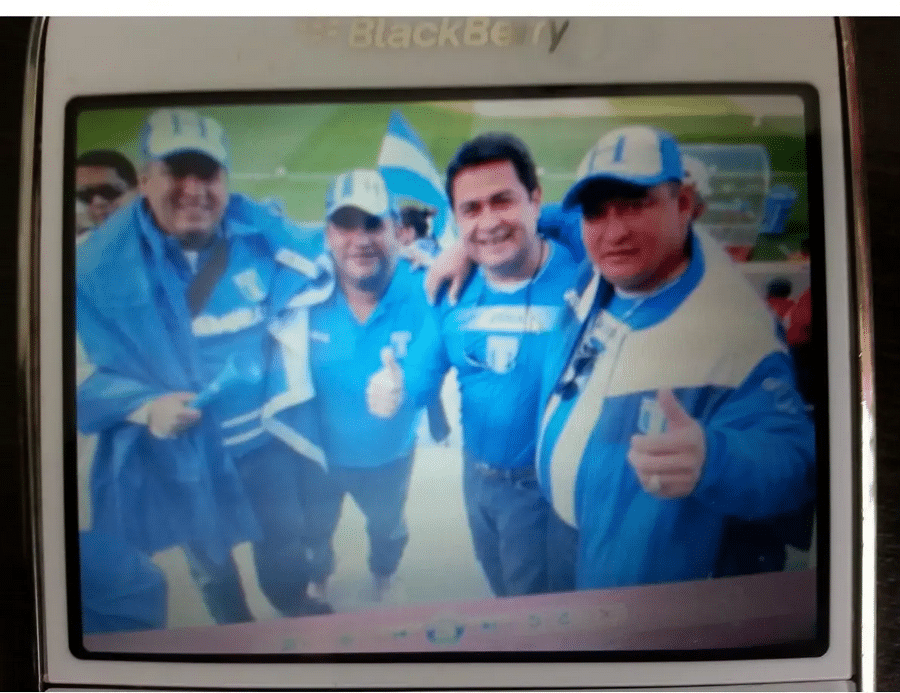
Photographs placing Hernandez with cartel members on an international trip. Intercepted phone calls. Phone data showing cartel visits to the presidential palace. None of these are mentioned anywhere in Parlato’s series. The “nothing else” framing is not a characterization of thin evidence. It is a false statement about what was introduced at trial.
Beyond physical evidence, the trial also included testimony from a DEA agent about drug trafficking trends, documentary evidence from related prosecutions including the Tony Hernandez case, and evidence from Geovanny Fuentes Ramirez, who was himself convicted in a related SDNY proceeding. Parlato’s four-cooperators framework omits entire categories of evidence that were before the jury.
❌ CRITICAL OMISSION: The Tony Hernandez parallel
Part 5’s argument, that the prosecution was built on the bought testimony of cartel murderers with nothing else to support it, has a fatal problem that Parlato never addresses: the identical argument applies to the 2019 conviction of Juan Orlando’s brother, Tony Hernandez.
Tony Hernandez was convicted in October 2019 using many of the same cooperating witnesses, including Ardon. He was sentenced to life plus 30 years. That prosecution happened under Trump’s DOJ, with Trump-appointed prosecutors, during Trump’s presidency, when Juan Orlando Hernandez was still a sitting president and a U.S. ally. If the cooperators were lying instruments of a Biden political operation, they were doing it two years before Biden took office, for prosecutors who later became Trump judicial appointees.
Parlato mentions Tony’s conviction only in passing across the entire series and never grapples with what it means for his theory. A cooperator system that is inherently corrupt does not become corrupt only when it produces a verdict Parlato dislikes.
⚠️ LEGITIMATE BUT INCOMPLETE: The Lobo-Maradiaga contradiction on Hilda Hernandez
Parlato notes that Lobo and Rivera Maradiaga gave contradictory accounts of cash bribes allegedly paid to Hernandez’s sister Hilda, and that Hilda was dead and could not clarify either version. If accurate as described, this is a genuine inconsistency worth knowing about. Two cooperators telling different stories about the same transaction is exactly the kind of detail that defense counsel should exploit on cross-examination, and presumably did.
However, the existence of inconsistencies between witnesses about peripheral details is not the same as the entire testimony being fabricated. In any complex conspiracy spanning nearly two decades and involving dozens of intermediaries, some witnesses will remember details differently. A jury instructed to evaluate credibility weighed this. The verdict was unanimous.
❌ MISLEADING: The sentence disparity as evidence of injustice
The rhetorical core of Part 5 is the contrast: four cooperators collectively served about 19 years for 134 murders and 700 tons of cocaine, while the man they testified against got 45 years. Parlato presents this as self-evidently unjust.
But the disparity is the explicit, deliberate design of the cooperation system, not a sign that something went wrong. Cooperation agreements reward defendants who provide substantial assistance in prosecuting others. The person at the top of a criminal conspiracy, the one who directed protection for drug shipments using the power of a national government, is appropriately sentenced more harshly than the mid-level operators who paid him. The comparison inverts the logic of the system: the cooperators’ light sentences are evidence that the system is working as designed, not evidence that the target was framed.
Parlato would presumably not argue that El Chapo’s life sentence was unjust because some of the cooperators who testified against him served far less time. The same logic applies here.
❌ BASELESS SPECULATION: “Who ordered them from above in the Biden administration”
Parlato ends the piece with: “Who ordered them from above in the Biden administration is hard to know.” This is innuendo dressed as restraint. It implies, without a single piece of evidence, that a named senior Biden administration official ordered the SDNY prosecution of Hernandez as a political hit. No such evidence has been presented anywhere in the series. The investigation began under Obama. The evidentiary foundation was built under Trump. The indictment was filed the day Hernandez lost presidential immunity. Parlato’s suggestion of a Biden White House kill order is not a conclusion that follows from anything he has documented. It is conspiracy theorizing that trades on the series’ accumulated unanswered questions to imply an answer Parlato has not established.
❌ REPEATED: Subornation of perjury stated as fact again
For the second consecutive installment, Parlato states: “The federal term for that pattern, when it is proven, is subornation of perjury.” He then immediately acknowledges it has not been proven (“when it is proven”) before treating the conviction as the product of exactly that crime. The rhetorical sleight of hand here is subtle but worth naming: “when it is proven” is doing the work of a disclaimer while the surrounding sentences treat the conclusion as already established. It is not established. Four cooperators with incentive to lie testifying consistently with each other about a defendant’s guilt does not, without more, prove that prosecutors coached false testimony.
The Deeper Problem: What Part 5 Ignores About How Conspiracy Prosecutions Work
Parlato’s entire argument in Part 5 rests on the premise that a conviction built primarily on cooperator testimony, without wiretaps of the target or documentary evidence directly naming him, is inherently suspect. This premise, taken seriously, would invalidate a significant portion of all federal drug conspiracy convictions in American history, including virtually every major SDNY narco prosecution.
The El Chapo conviction relied heavily on cooperators. The Gotti conviction relied on a cooperator. The Medellin cartel prosecutions relied on cooperators. In each of those cases, the central defendant was insulated from direct physical evidence by layers of intermediaries and plausible deniability, which is precisely why he was at the top. The absence of a wiretap on Hernandez is not suspicious. It is expected. Heads of state do not conduct cartel business on traceable lines. Targeting them through cooperators who did interface with them directly is how these cases are built.
A jury that hears four cooperators testify, is explicitly warned about their incentives, watches them get cross-examined for days, and still returns a unanimous guilty verdict on all counts has done its job. Parlato’s series treats that verdict as the aberration requiring explanation. The more straightforward explanation is that the jury believed the witnesses, weighed the physical evidence, and convicted.
Summary Scorecard
| Claim | Verdict |
|---|---|
| Four cooperator profiles and 5K1.1 incentive structure | ✅ Largely accurate |
| Fabio Lobo served seven years of his sentence | ❌ Wrong; Tico Times and other sources report nine years in custody |
| “No recording, no photograph, no financial record, no corroboration” | ❌ Factually false; InSight Crime and trial reporting document intercepted phone calls, bribery ledgers, Valle cartel photographs, and phone data showing palace visits#x274C; Factually false; trial record includes intercepted phone calls, bribery ledgers, phone data showing cartel visits to the presidential palace, and a photograph of Hernandez with Valle cartel members at the 2010 World Cup in South Africa, confirmed in documents by Valle himself |
| Lobo and Maradiaga contradicted each other on Hilda Hernandez payments | ⚠️ Possibly accurate; a real inconsistency if verified, but peripheral to the core testimony |
| Sentence disparity between cooperators and Hernandez proves injustice | ❌ Misleading; the disparity is the explicit design of the cooperation system, not evidence of a frame |
| Someone in the Biden White House ordered the prosecution | ❌ Pure speculation with zero documented support anywhere in the series |
| The Tony Hernandez 2019 conviction under Trump’s DOJ used the same cooperators | ❌ Omitted entirely; fatally undermines the “Biden political operation” theory |
| Subornation of perjury occurred | ❌ Stated as fact for the second consecutive installment; still not established by evidence presented |
This article is part of the Snow Job series: a complete fact-check of Frank Parlato’s six-part defense of convicted drug trafficker Juan Orlando Hernandez.
- Snow Job: Fact-Checking Frank Parlato’s White Wash of Honduran President Juan Orlando Hernandez
- Snow Job, Part 2: Fact-Checking Parlato’s Case-Within-a-Case on Juan Orlando Hernandez
- Snow Job, Part 3: Fact-Checking Parlato’s Venue Argument Against the Hernandez Prosecution
- Snow Job Part 4: Fact-Checking Parlato’s “Prosecutors Coached the Lie”
- Snow Job Part 5: Fact-Checking Parlato’s “No Corroboration” Argument on Hernandez
- Snow Job Part 6: Fact-Checking Parlato’s Finale on Juan Orlando Hernandez
- Snow Job, Part 7: Fact-Checking Parlato’s “Venue Lie” Argument on Hernandez